Autism Centre Services In Varanasi
Autism is a developmental condition that affects how a child communicates, learns, and interacts with others. Every child with autism is unique. Some children may speak less, some may struggle with social interaction, and others may show strong interest in specific activities.
For many parents, the first signs can feel confusing. A child may avoid eye contact, respond less to their name, or show delays in speech. Parents often spend time trying to understand what their bachcha is experiencing and what kind of help they need.
One of the biggest challenges parents face is finding the right guidance. When families begin searching for autism therapy, they often come across many confusing terms and treatment approaches.
The truth is simple – children with autism can learn and grow when they receive the right support at the right time.
Therapy helps children develop important life skills step by step. These include communication, emotional regulation, social interaction, learning ability, and independence.
For families searching for autism support in the city, Arambh Autism Centre in Varanasi has become a trusted place where children receive structured therapy and parents receive guidance throughout the journey.
Arambh Autism Centre is known as one of the oldest autism support centres in Varanasi. Over the years, many parents from the city and nearby areas have recommended the centre because of its practical therapy approach and supportive environment.
The centre is led by Pooja Gupta, who is not only a therapist but also a mother of an autistic child. Because of her personal journey, she deeply understands the emotional questions, worries, and hopes that parents carry for their child.
Her experience has shaped the philosophy of the centre – therapy should focus on real-life progress that improves a child’s everyday experiences.
Why Early Support Makes a Big Difference
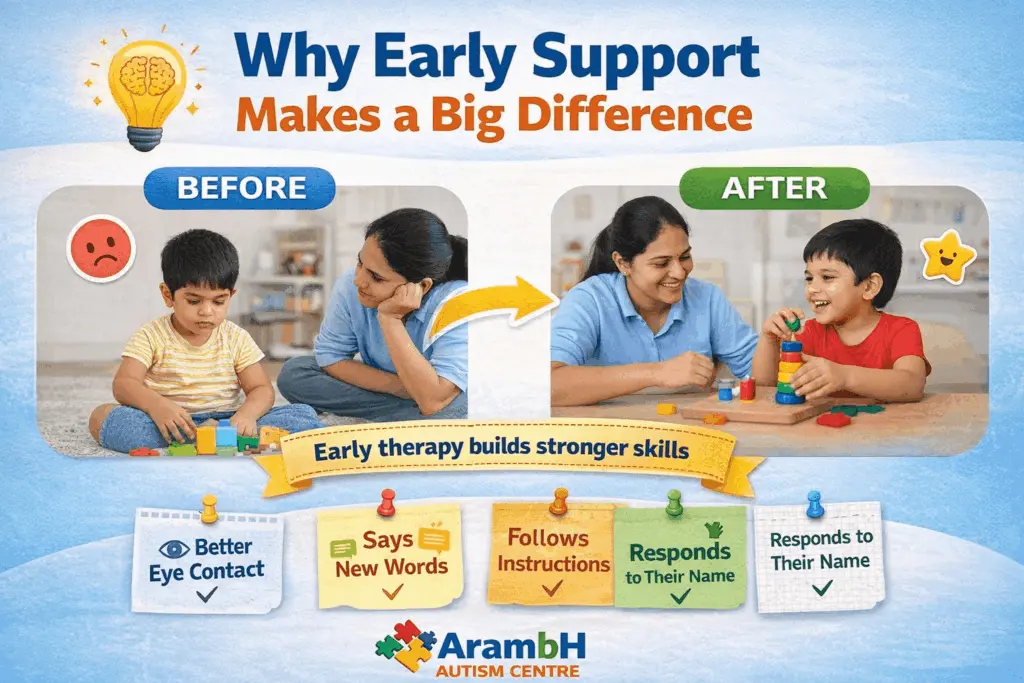
Early childhood is one of the most important stages of brain development. During the first few years of life, children learn how to communicate, understand emotions, and interact with the world around them.
For children with autism, this stage becomes even more important because early therapy can help strengthen these skills.
When therapy begins early, children have more opportunities to develop communication and learning abilities. The brain is still developing rapidly, which means it can adapt and learn new skills more easily.
Many parents worry that their child may never catch up. But the truth is that with structured therapy and thoda patience, children can make meaningful improvements.
Progress may not happen overnight. Instead, it happens slowly through repeated practice and guidance.
Parents often notice small milestones first:
• A child responding to their name
• Improved eye contact
• Saying a new word
• Following simple instructions
These small achievements build confidence for both the child and the parents.
Therapists at Arambh Autism Centre often remind families that improvement in autism happens dheere-dheere progress through consistent support.
With the right therapy plan, children can build stronger skills that help them navigate school, relationships, and daily life.
Early Intervention Services
Early intervention is designed for young children who show signs of developmental delays or autism.
At Arambh Autism Centre, early intervention programmes support children from around 18 months and above. The goal is to help children develop the basic skills that form the foundation for learning and communication.
These early therapy sessions focus on three important areas:
| Development Area | How Therapy Helps |
|---|---|
| Communication skills | Helping children understand and express language |
| Social interaction | Teaching children how to respond to people around them |
| Behaviour and learning | Supporting focus, attention, and simple learning tasks |
During early intervention sessions, therapists use playful activities that naturally encourage learning.
Children may practice:
• Responding to their name
• Looking at objects and people
• Using gestures or simple words
• Participating in play activities
These activities help children slowly build awareness of their environment and people around them.
For parents, early intervention also provides important guidance. They learn how to interact with their child in ways that encourage communication and learning.
This early support builds a strong foundation for the child’s future development.
Special Education Programme
Children with autism often learn differently from other children. Traditional classroom teaching methods may not always work for them.
A special education programme helps bridge this gap by adapting teaching methods according to each child’s needs.
At Arambh Autism Centre, therapists create personalised learning plans that focus on the child’s strengths and challenges.
| Learning Area | Skills Developed |
|---|---|
| Basic academic learning | Letters, numbers, and simple concepts |
| Communication | Expressing needs and understanding instructions |
| Social interaction | Learning how to interact with others |
| Daily life skills | Following routines and completing simple tasks |
These structured sessions help children feel more comfortable with learning.
Instead of overwhelming the child, therapists introduce new concepts step by step.
For example, a child may first learn to identify objects using pictures. Gradually they learn to name them, understand their use, and apply them in real situations.
This approach builds confidence and independence.
Parents often notice that their child becomes more comfortable with structured learning environments after consistent special education support.
Occupational and Behavioural Therapy
Many autistic children experience sensory challenges. This means their brain may process sounds, textures, or movement differently.
Some children may feel overwhelmed by loud sounds. Others may seek constant movement or struggle to sit still.
Occupational therapy helps children manage these sensory experiences while developing daily life skills.
| Therapy Focus | Benefit for the Child |
|---|---|
| Sensory regulation | Helping children manage sensory input |
| Fine motor skills | Improving writing, drawing, and hand movements |
| Daily independence | Learning skills like dressing and eating |
| Focus and attention | Supporting concentration during activities |
Behavioural therapy also plays an important role in helping children manage emotions and reactions.
Children may sometimes become upset when routines change or when they cannot express their needs clearly.
Therapists help children learn structured routines and calm responses.
Over time, these routines help children feel more secure and confident.
Special 1:1 Sessions
Every child with autism learns differently. Some children may need extra guidance to understand instructions or practice new skills.
That is why one-to-one therapy sessions are an important part of autism support.
In these sessions, a therapist works individually with the child.
| Feature of 1:1 Sessions | Benefit |
|---|---|
| Personalised attention | Therapist focuses fully on the child’s needs |
| Individual pace | Child learns without pressure |
| Safe environment | Child feels comfortable exploring new skills |
| Focused skill building | Therapist targets specific developmental goals |
These sessions allow therapists to carefully observe the child’s learning style and adapt the activities accordingly.
Children often feel more relaxed and engaged during one-to-one sessions because they receive undivided attention.
This personalised approach helps accelerate learning and confidence.
Speech Therapy for Communication
Communication is one of the most common challenges for children with autism.
Some children may have delayed speech, while others may find it difficult to express their thoughts clearly.
Speech therapy focuses on helping children develop meaningful communication skills.
| Communication Skill | Therapy Goal |
|---|---|
| Understanding language | Following simple instructions |
| Expressing needs | Using words, gestures, or pictures |
| Social interaction | Learning conversation basics |
| Emotional expression | Communicating feelings |
Therapists use interactive activities to encourage communication.
For example:
• Using pictures to identify objects
• Practicing simple words through play
• Encouraging eye contact during interaction
• Teaching children to ask for things they want
When children begin communicating better, it reduces frustration and improves relationships with parents, siblings, and teachers.
Speech therapy helps children feel heard and understood.
Middle Age Program for Teens and Young Adults
Autism support does not stop during early childhood.
As children grow older, they face new challenges related to independence, social interaction, and daily responsibilities.
The Middle Age Program at Arambh Autism Centre focuses on supporting older children and teenagers.
This program helps young individuals develop life skills that prepare them for adulthood.
| Skill Area | Focus |
|---|---|
| Daily living skills | Managing personal routines |
| Social communication | Interacting with others confidently |
| Emotional regulation | Handling stress and frustration |
| Independence | Performing everyday tasks |
Teenagers often need guidance in understanding social expectations and building confidence.
Structured support during this stage helps them become more independent and self-reliant.
Parents also receive guidance on how to support their child’s transition into adulthood.
How Therapy Happens at Arambh Autism Centre
Therapy at Arambh Autism Centre follows a structured process that focuses on understanding each child’s unique needs.
The first step is a detailed assessment.
| Step | What Happens |
|---|---|
| Child assessment | Therapists observe behaviour, communication, and learning patterns |
| Strength identification | Understanding what the child does well |
| Therapy planning | Creating personalised therapy goals |
| Regular sessions | Structured therapy sessions for skill development |
| Progress monitoring | Tracking improvements and adjusting therapy |
Parents are an important part of this process.
Therapists regularly discuss progress with families and suggest activities that can be practiced at home.
Because Pooja Gupta is also a mother of an autistic child, she understands how important it is that parents ko support milta hai throughout the therapy journey.
Her personal experience allows the centre to approach therapy with empathy and understanding.
The Importance of Parent Involvement
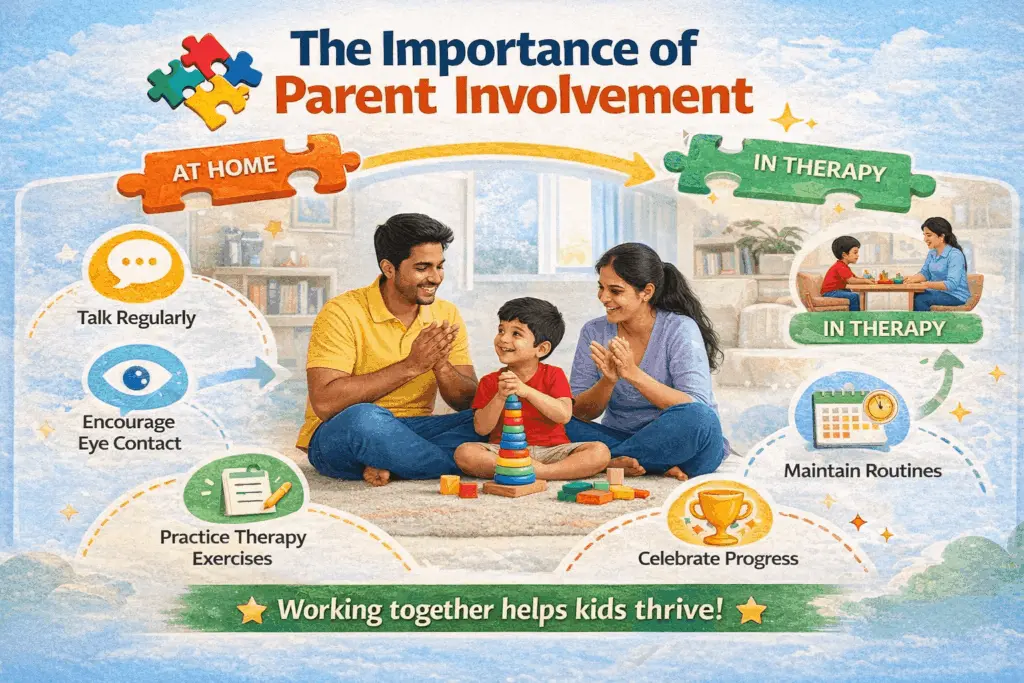
Therapy sessions are only one part of a child’s development journey.
Children spend most of their time at home with their families. That is why parent involvement plays a very important role.
Parents can support their child’s development through small daily activities.
Some simple ways include:
• Talking to the child regularly
• Encouraging eye contact during conversation
• Practicing therapy exercises suggested by therapists
• Maintaining consistent routines
• Celebrating small achievements
Parents often worry about whether they are doing enough for their child.
The truth is that even small efforts at home can make a big difference.
When therapy and home practices work together, children learn faster and feel more confident.
Signs Your Child May Benefit From Professional Support
Sometimes parents notice developmental differences but are unsure whether they should seek professional help.
Paying attention to certain signs can help parents decide when to consult a specialist.
Common signs include:
| Development Concern | What Parents May Notice |
|---|---|
| Speech delay | Child speaks very few words |
| Limited social interaction | Child avoids eye contact or social play |
| Behaviour challenges | Frequent meltdowns or frustration |
| Difficulty with routines | Child struggles with daily activities |
| Communication issues | Child cannot express needs clearly |
If parents observe these signs consistently, it may be helpful to seek professional evaluation and support.
Early guidance can make a significant difference in a child’s development.
Why Parents in Varanasi Trust Arambh Autism Centre
Over the years, many families in Varanasi have turned to Arambh Autism Centre for autism support and therapy.
Several factors have contributed to the trust parents place in the centre.
| Reason | Benefit for Families |
|---|---|
| Long-standing presence | One of the oldest autism support centres in Varanasi |
| Experienced therapists | Professionals trained in autism therapy |
| Parent-focused approach | Families receive guidance and support |
| Personal leadership | Led by Pooja Gupta, who understands autism personally |
| Supportive environment | Children learn in a calm and caring space |
Parents often feel reassured knowing that the centre is guided by someone who has personally experienced the autism journey.
This understanding creates a compassionate and practical approach to therapy.
The Journey of Progress
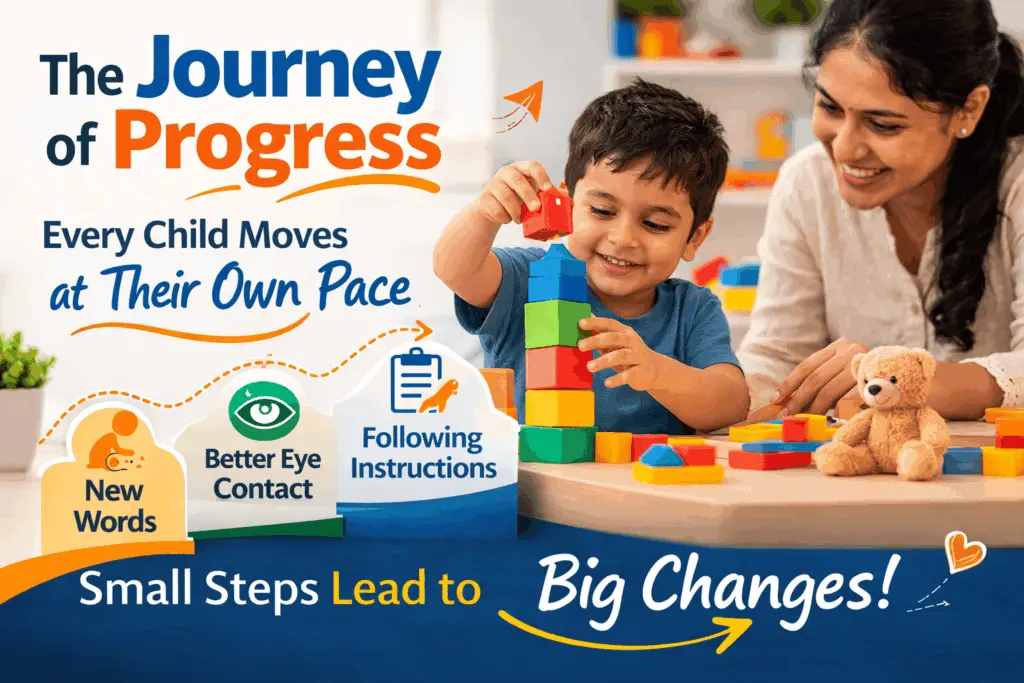
Every child’s journey with autism is different.
Some children may learn new skills quickly, while others may take more time.
What matters most is consistent guidance, patience, and encouragement.
Parents should remember that progress happens step by step.
Small improvements – such as a new word, improved eye contact, or following instructions – are important milestones.
With the right therapy and structured support, children can continue building new abilities over time.
A Supportive Path Forward for Families
For parents, the autism journey can feel overwhelming at times. Questions about the future, learning ability, and independence often create worry.
However, early and consistent support can make a meaningful difference in a child’s life.
Therapy helps children develop communication, learning, and emotional skills that allow them to participate more confidently in everyday life.
Families in Varanasi who are searching for reliable autism support often find reassurance at Arambh Autism Centre.
The centre focuses on helping children grow at their own pace while guiding parents throughout the journey.
Every child has the potential to learn and improve.
With patience, understanding, and the right support system, children can build stronger skills and a brighter future.