Social Skills Training for Children with Autism in Varanasi
Many children with autism find social interaction confusing. Simple things like talking to other children, understanding emotions, or joining a group activity can feel difficult for them.
Parents often notice that their baccha prefers playing alone or struggles to communicate with others. This situation can make parents worried and sometimes unsure about how to help.
This is where social skills therapy autism programs become very helpful.
Social skills therapy helps children learn how to interact with others, understand emotions, and participate in everyday social situations. These skills are important for building friendships, learning in school, and feeling comfortable in different environments.
At Arambh Autism Centre in Varanasi, social skills therapy focuses on helping children learn practical social interaction skills step by step. The goal is not just teaching theory but helping children apply these skills in real-life situations.
Many families in the city trust the centre because it focuses on practical development, parent support, and gradual progress that happens dheere dheere.
Why Social Skills Are Difficult in Autism
Children with autism experience the world differently. Their brain processes communication and social signals in a unique way.
Because of this, they may struggle to understand social situations that seem simple to others.
Parents may notice that their baccha finds it difficult to:
• Understand facial expressions
• Maintain eye contact during conversation
• Take turns while talking or playing
• Understand emotions of others
• Start or continue a conversation
These challenges do not mean the child does not want friends or interaction. Often the child simply finds social situations confusing.
Understanding these difficulties helps parents better samajhna what their child is experiencing.
The table below explains some common challenges children with autism face.
| Social Challenge | What Parents May Notice |
|---|---|
| Limited eye contact | The child avoids looking at people while talking |
| Difficulty understanding emotions | The child may not recognise if someone is happy, sad, or upset |
| Trouble with turn-taking | The child may interrupt or struggle during games |
| Playing alone | The child prefers solitary play instead of group activities |
| Difficulty starting conversations | The child may not know how to greet or speak with others |
Social skills therapy autism programs focus on helping children slowly understand and practice these interactions.
Skills Children Learn in Social Skills Therapy
Social skills therapy helps children learn many important abilities that support everyday interaction.
These skills are taught through guided practice, play activities, and real-life examples.
Here are some of the important skills children develop during therapy.
| Social Skill | How It Helps the Child |
|---|---|
| Eye contact | Helps children connect better during conversations |
| Turn taking | Helps children participate in games and discussions |
| Sharing | Encourages cooperation with other children |
| Understanding emotions | Helps children respond appropriately to others |
| Listening skills | Helps children follow conversations and instructions |
| Conversation skills | Helps children speak and respond naturally |
For example, therapists may practice greeting someone with a simple “hello” or asking a friend to play.
These small steps help children slowly understand how social communication works.
With regular practice, children begin using these skills naturally in daily life.
Group Therapy Benefits
Group therapy is an important part of social skills therapy autism programs.
In group sessions, children interact with other children in a structured and supportive environment.
This helps them practice social skills in a safe setting where mistakes are allowed and learning is encouraged.
Some benefits of group therapy include:
• Learning how to interact with other children
• Practicing turn taking in games
• Understanding group rules
• Improving listening skills
• Learning to wait and respond appropriately
The table below shows how group therapy supports development.
| Group Activity | Skill Developed |
|---|---|
| Playing board games | Turn-taking and patience |
| Role-playing conversations | Communication practice |
| Team activities | Cooperation and sharing |
| Group storytelling | Listening and responding |
| Emotion recognition games | Understanding feelings |
Group therapy helps children feel comfortable interacting with peers.
Over time, children become more relaxed and confident while interacting with others.
Helping Children Build Friendships
Many parents worry when their child struggles to make friends. Friendship is an important part of childhood, but it can be challenging for children with autism.
Social skills therapy helps children slowly learn how friendships work.
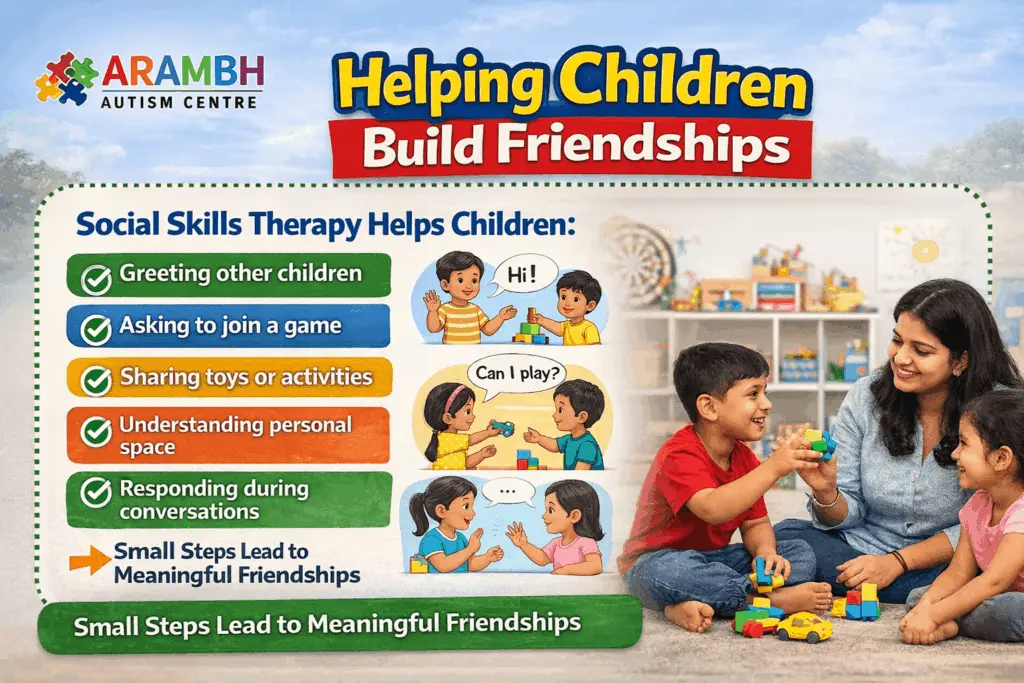
Children practice:
• Greeting other children
• Asking to join a game
• Sharing toys or activities
• Understanding personal space
• Responding during conversations
These small lessons make social situations easier to understand.
Children begin to realise that interaction can be enjoyable and not stressful.
For many children, this learning process happens dheere dheere. But with regular practice and support, meaningful friendships can develop.
Confidence Building
When children struggle with social interaction, it can affect their self-confidence.
They may feel unsure in school, avoid group activities, or become frustrated when communication does not go well.
Improving social interaction skills can greatly increase a child’s confidence.
Here are some ways therapy supports confidence.
| Situation | How Therapy Helps |
|---|---|
| Classroom participation | Children feel comfortable answering questions |
| Playing with other children | Children enjoy group play |
| Family gatherings | Children interact more comfortably |
| School activities | Children participate with less hesitation |
As children begin to communicate better and interact with others, they start feeling more comfortable in social environments.
Parents often notice positive changes not only in communication but also in their child’s emotional well-being.
How Social Skills Therapy Works at Arambh Autism Centre
At Arambh Autism Centre, therapy is designed to help children develop real-life social skills.
The centre is known as one of the oldest, trusted and recommended autism therapy centres in Varanasi.
Therapy sessions focus on practical learning through play, structured interaction, and guided communication.
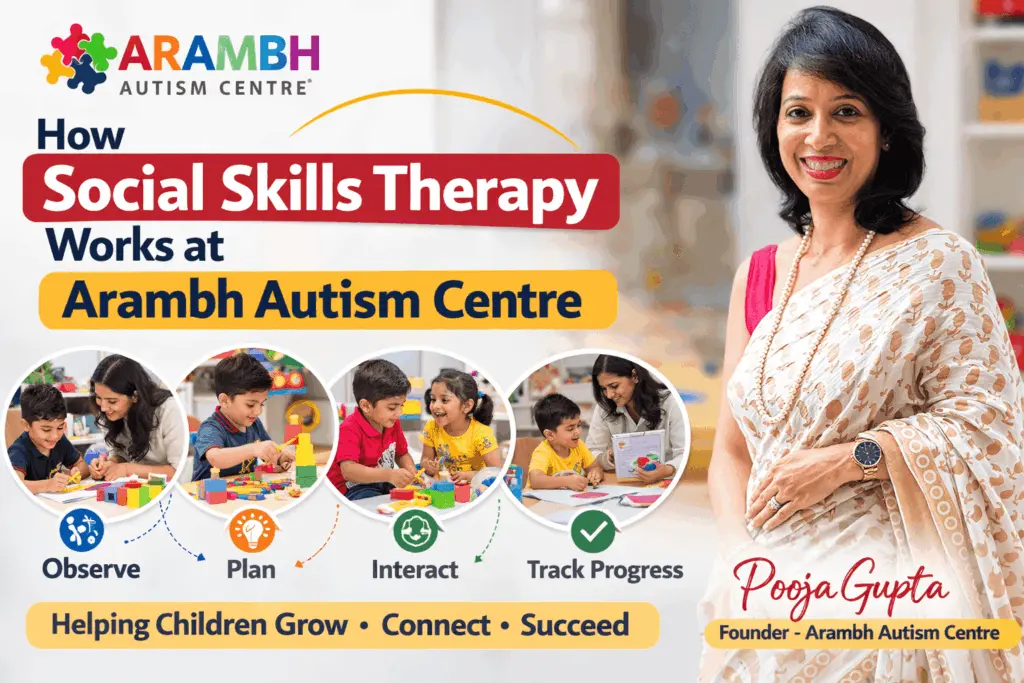
The process usually includes:
• Initial observation and understanding of the child
• Identifying social communication challenges
• Creating a personalized therapy plan
• Individual and group interaction sessions
• Continuous monitoring of progress
One of the reasons many families trust the centre is the leadership of Pooja Gupta.
She is not only experienced in autism therapy but is also a mother of an autistic child.
Because of her personal journey, she understands the emotions, worries, and hopes parents experience.
This perspective helps the centre provide not just therapy but also guidance and reassurance to families.
Parents often feel comforted knowing that someone who has walked the same path is guiding them.
The centre focuses on helping children apply social skills in real situations – whether at school, playgrounds, or ghar par.
Role of Parents in Social Development
Parents play a very important role in helping their child develop social skills.
Therapy sessions provide guidance, but everyday interaction at home is equally valuable.
Simple activities at home can support social development.
Here are some ways parents can help.
• Encourage your baccha to greet family members
• Practice simple conversations during daily activities
• Use games that involve turn-taking
• Help your child identify emotions using pictures or stories
• Praise your child for positive social behaviour
When parents actively support therapy goals at home, children learn faster and become more comfortable practicing social skills.
Consistency between therapy sessions and home interaction helps children apply what they learn.
Why Parents in Varanasi Trust Arambh Autism Centre
Choosing the right therapy centre is a very important decision for families.
Many parents in Varanasi choose Arambh Autism Centre because of its compassionate and practical approach to autism therapy.
Several factors contribute to the trust parents place in the centre.
| Feature | Benefit for Families |
|---|---|
| Experienced therapists | Children receive professional support |
| Parent guidance | Families understand how to support their child |
| Practical therapy methods | Skills are useful in everyday life |
| Safe learning environment | Children feel comfortable during therapy |
Another important reason parents feel supported here is the guidance of Pooja Gupta.
Her experience as both a professional and a parent creates an environment where families feel understood and supported.
The centre focuses not only on therapy sessions but also on helping parents understand their child’s unique development journey.
When Should Parents Consider Social Skills Therapy
Some parents are unsure when they should consider social skills therapy for their child.
Early support can make a significant difference in a child’s development.
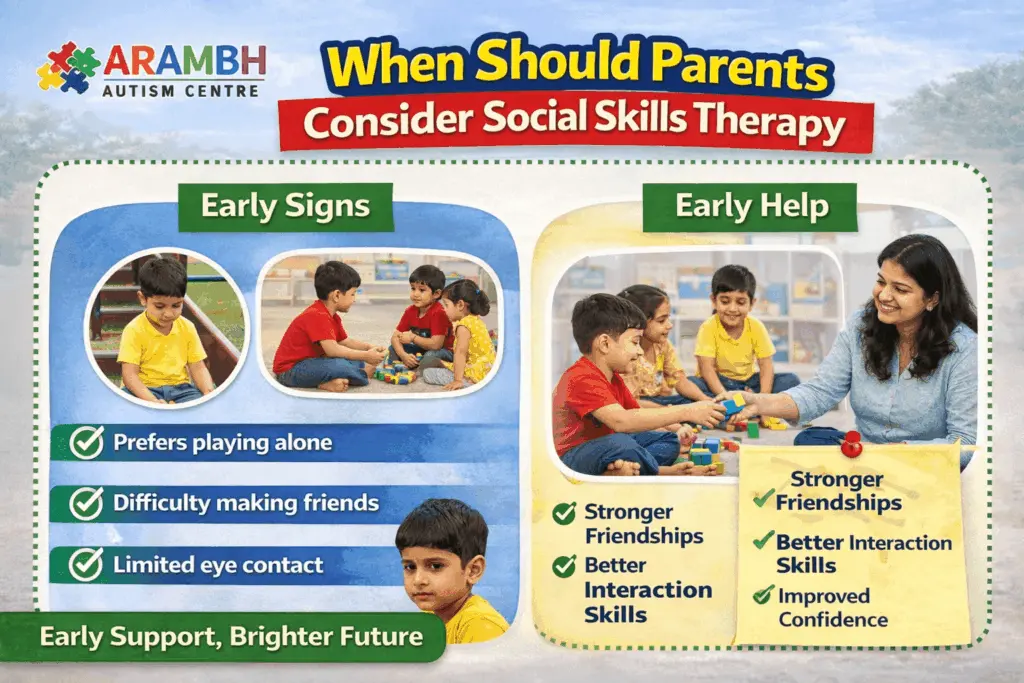
Parents may consider social skills therapy autism when they notice signs such as:
• The child prefers playing alone most of the time
• Difficulty making friends at school
• Limited eye contact during conversations
• Difficulty understanding emotions of others
• Trouble participating in group activities
Seeking guidance early allows therapists to help children develop stronger social interaction skills.
Early intervention often leads to better long-term outcomes.
Parents should remember that seeking help is a positive step toward supporting their child’s development.
A Supportive Path Forward for Your Child
Every child learns and develops at their own pace.
For children with autism, social interaction may take extra time and guidance to develop. But with the right support, many children can improve their communication and social skills significantly.
Social skills therapy autism programs focus on helping children understand interactions, build friendships, and feel confident in everyday situations.
Parents should know that they are not alone in this journey.
At Arambh Autism Centre in Varanasi, families receive compassionate support, practical therapy, and guidance throughout their child’s development journey.
If you are concerned about your child’s social interaction or communication skills, reaching out for guidance can be the first positive step.
The team at Arambh Autism Centre is always ready to support parents and help children grow with confidence, understanding, and encouragement.
If you want to know more, take a look at our Arambh Autism Services page.