CBT Therapy For Autism
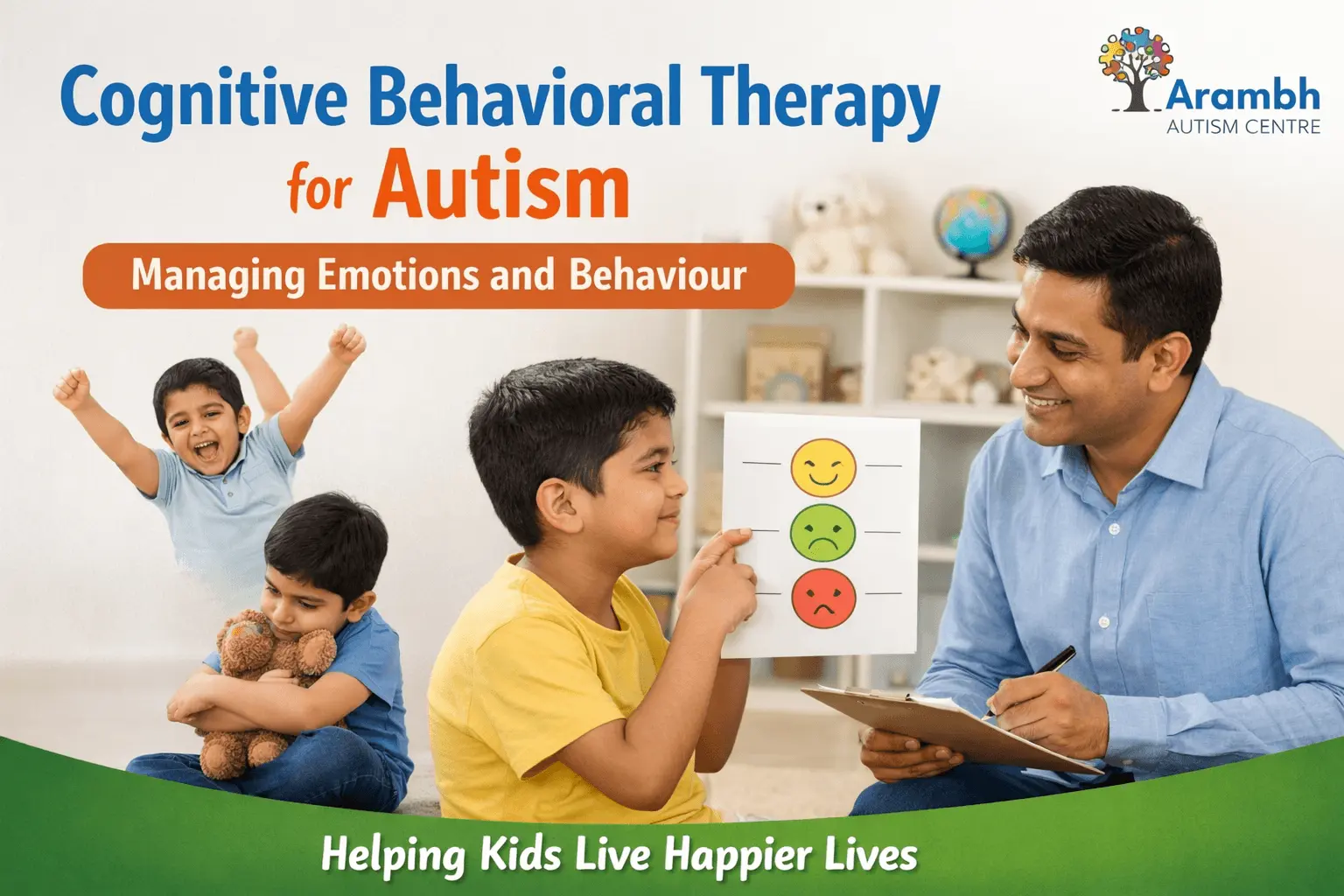
When parents first learn about autism, most of the focus is on speech, learning, and social skills.
But as time goes on, many parents notice something else.
Their bachcha may struggle with emotions.
Sometimes the child gets upset very quickly. Sometimes they feel anxious for small changes. Sometimes anger comes suddenly. Sometimes they find it hard to calm down.
This can leave parents confused.
“Why is my child reacting like this?”
“How can I help them feel better?”
These emotional and behavioural challenges are very common in autism.
And this is where CBT therapy for autism can be helpful for some children.
Cognitive Behavioural Therapy, or CBT, is a simple and structured approach that helps children understand their thoughts, feelings, and actions.
It is not for every child.
But for the right child, it can support emotional understanding, reduce anxiety, and improve behaviour responses.
In this guide, we will help you understand CBT in a simple, practical way – so you can decide what may be right for your child.
What is Cognitive Behavioural Therapy for Autism
Cognitive Behavioural Therapy sounds like a big term.
But the idea behind it is simple.
CBT helps a child understand three things:
-
What they are thinking
-
What they are feeling
-
How they are behaving
And how all these are connected.
For example:
If a child thinks – “This is scary”
They may feel anxious
And then they may cry or avoid the situation
CBT helps the child slowly recognise this pattern.
Then, step by step, they are guided to respond in a better way.
In simple words:
CBT for autism helps children handle emotions and behaviour in a more controlled and calm way.
This process is always done dheere dheere, with patience and support.
How CBT Helps Children with Autism
Children with autism often find it difficult to understand and express emotions.
They may feel overwhelmed but not know how to explain it.
CBT therapy autism helps in practical ways:
-
Understanding basic emotions like happy, sad, angry, scared
-
Managing frustration when things don’t go their way
-
Reducing anxiety in new or uncomfortable situations
-
Handling small changes in routine
-
Learning how to calm down when upset
-
Improving behaviour responses
-
Building self-control step by step
For example:
Instead of crying or shouting, a child may learn to:
-
Ask for help
-
Take a break
-
Use simple calming techniques
These are small but powerful changes.
Is CBT Suitable for Every Child with Autism
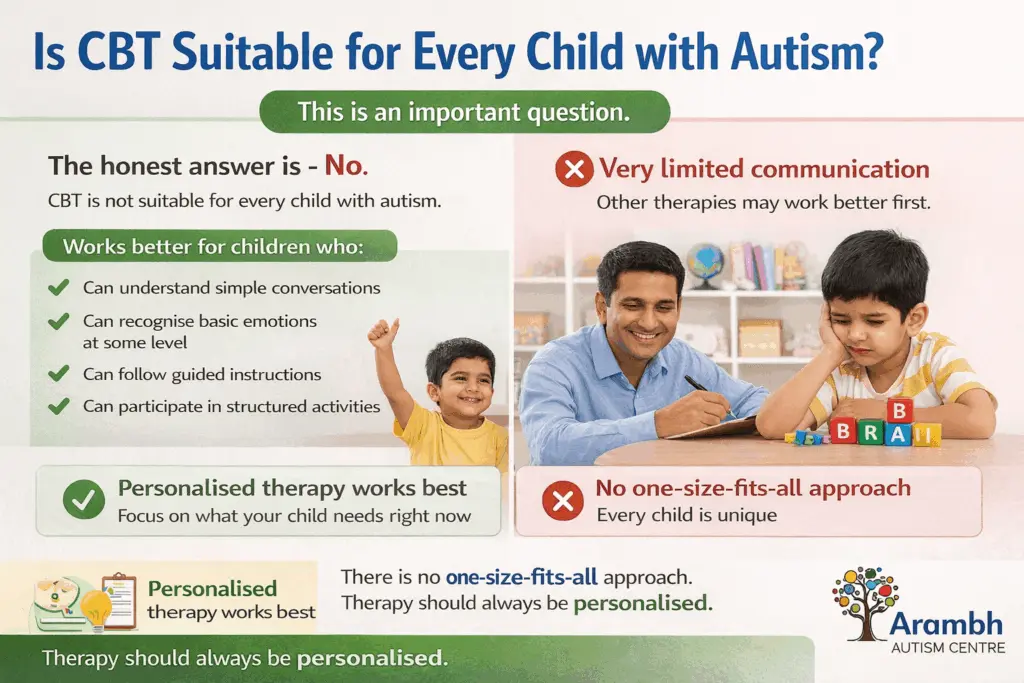
This is an important question.
The honest answer is – No.
CBT is not suitable for every child with autism.
It works better for children who:
-
Can understand simple conversations
-
Can recognise basic emotions at some level
-
Can follow guided instructions
-
Can participate in structured activities
For children with very limited communication, other therapies may be more helpful first.
That is why therapy should always be personalised.
There is no one-size-fits-all approach.
A good therapy plan focuses on what your child needs right now.
Common Emotional and Behaviour Challenges in Autism
Many parents feel worried when their child shows strong emotions.
But these challenges are very common.
Here are some emotional and behavioural difficulties children may experience:
-
Anxiety in new situations
-
Sudden anger or meltdowns
-
Frustration when unable to communicate
-
Difficulty handling changes in routine
-
Fear in social settings
-
Rigid behaviour patterns
-
Emotional overload
-
Difficulty expressing feelings
Here is a simple table to understand this better:
| Challenge | What It May Look Like |
|---|---|
| Anxiety | Fear of school, new places, or people |
| Anger | Sudden shouting, crying, hitting |
| Frustration | Getting upset when not understood |
| Change Difficulty | Strong reaction to routine changes |
| Social Stress | Avoiding people or group activities |
| Rigid Thinking | Wanting things only one way |
| Emotional Overload | Crying or shutdown without clear reaso |
These behaviours are not “bad behaviour”.
They are signs that the child is struggling internally.
Signs a Child May Benefit from CBT
Some children may benefit from CBT support.
Here are some signs parents may notice:
-
Frequent worry or fear
-
Strong emotional reactions
-
Difficulty calming down
-
Gets upset over small changes
-
Repetitive negative thinking (in older children)
-
Stress related to school or social situations
-
Behaviour problems linked to emotions
If you notice these patterns regularly, it may be helpful to explore CBT-based support.
What Happens in a CBT Session for Autism
Parents often wonder what actually happens in therapy.
CBT sessions are not strict or stressful.
They are structured but child-friendly.
Here is what a session may include:
-
Talking about feelings in simple words
-
Using pictures or visual tools
-
Identifying what triggers emotions
-
Teaching calming techniques
-
Practising better responses
-
Role play (acting out situations)
-
Problem-solving small challenges
-
Parent guidance for ghar par support
Here is a simple table for clarity:
| Session Activity | Purpose |
|---|---|
| Talking about feelings | Helps child identify emotions |
| Visual supports | Makes learning easier |
| Trigger identification | Understands what causes reactions |
| Calming strategies | Teaches how to relax |
| Role play | Practices real-life situations |
| Parent guidance | Ensures consistency at home |
Sessions are always adjusted according to the child’s level.
CBT for Anxiety in Autism
Many children with autism experience anxiety.
They may feel anxious about:
-
Going to school
-
Meeting new people
-
Changes in routine
-
Loud sounds or crowded places
CBT therapy autism helps children understand their worries.
Instead of just reacting, they learn:
-
What they are feeling
-
Why they are feeling it
-
What they can do about it
For example:
A child afraid of school may learn:
-
To express fear
-
To prepare step by step
-
To use calming techniques
This process happens dheere dheere.
No pressure.
Only guided support.
CBT for Managing Anger and Frustration
Anger and frustration are common in autism.
Often, they come from:
-
Not being understood
-
Not getting what the child wants
-
Sudden changes
-
Sensory discomfort
CBT helps children:
-
Recognise early signs of anger
-
Understand triggers
-
Learn calming steps
-
Replace outbursts with better responses
Practical goals include:
-
Using words instead of shouting
-
Taking a break when upset
-
Asking for help
-
Reducing behaviour escalation
This makes daily life easier for both the child and the family.
CBT and Emotional Regulation
Emotional regulation means managing feelings in a balanced way.
In simple words:
-
Recognising feelings
-
Understanding them
-
Responding calmly
Many autistic children struggle with this.
CBT helps build emotional regulation skills.
But it requires:
-
Practice
-
Repetition
-
Consistency
And support ghar par.
Over time, children may:
-
Stay calmer in stressful situations
-
Recover faster after being upset
-
Express feelings better
This takes time.
But it is possible.
Role of Parents in CBT Progress
Parents play a very important role.
Therapy sessions are limited.
Real learning happens in daily life.
Parents ko yeh samajhna zaruri hai:
You are part of the therapy process.
You can support your child by:
-
Noticing emotional triggers
-
Using the same calming strategies taught in therapy
-
Talking simply about feelings
-
Staying consistent
-
Following therapist guidance
You do not need to be perfect.
You just need to be consistent.
How Parents Can Support Emotional Growth at Home
Here are simple ways parents can support emotional growth:
-
Use simple words for feelings – happy, sad, angry
-
Keep daily routines predictable
-
Prepare your child before changes
-
Teach basic calming steps
-
Praise small emotional improvements
-
Stay calm during difficult moments
-
Follow professional guidance regularly
Small efforts done daily, ghar par, make a big difference.
Challenges Parents May Face in the Beginning
The emotional journey can be challenging.
Parents may feel:
-
Confused about what triggers behaviour
-
Helpless during meltdowns
-
Worried about school behaviour
-
Frustrated with slow progress
-
Pressured by family or society
-
Unsure about the right therapy
These feelings are normal.
Emotional growth does not happen quickly.
It happens dheere dheere.
Patience is very important.
Why Families in Varanasi Trust Arambh Autism Centre
For families looking for autism support in Varanasi, Arambh Autism Centre is a trusted name.
It is known as one of the oldest, trusted, and recommended autism therapy centres in Varanasi.
Families trust Arambh because:
-
Therapy is child-focused and practical
-
Plans are structured and personalised
-
Parents receive clear guidance
-
The environment is calm and supportive
-
Emotional and behavioural needs are handled carefully
The centre focuses on building a strong support system for both the child and the family.
How Pooja Gupta’s Journey Helps Families Feel Understood
One of the biggest strengths of Arambh Autism Centre is Pooja Gupta.
She is not only the founder.
She is also a mother of an autistic child.
This gives her a deep understanding of:
-
Emotional struggles parents face
-
Confusion during early stages
-
Daily life challenges
-
Social pressure and expectations
Because of her experience, parents feel:
-
Comfortable
-
Understood
-
Supported
This connection builds real trust.
When Parents Should Seek Help for Emotional and Behaviour Difficulties
Parents should consider seeking help when:
-
Emotional reactions are frequent
-
Anxiety affects daily life
-
Behaviour becomes difficult to manage
-
Child struggles to cope with routine situations
-
School or social stress increases
Taking the right shuruaat at the right time can help children develop better coping habits.
Early guidance always helps.
Can CBT Help Children with Autism Manage Emotions Better
Every child is different.
CBT does not work the same way for everyone.
But for some children, CBT therapy autism can:
-
Improve emotional awareness
-
Build coping skills
-
Reduce anxiety
-
Improve behaviour responses
-
Increase confidence
The key is:
-
Right therapy plan
-
Proper guidance
-
Consistent support system
With these, meaningful progress is possible.
Final Message for Parents
Supporting a child with emotional challenges can feel difficult.
But you are not alone.
With the right guidance, patience, and consistency, children can learn to:
-
Understand their feelings
-
Handle stress better
-
Respond more calmly
Progress may be slow.
But every small step matters.
If you are in Varanasi, connecting with Arambh Autism Centre can be a helpful step toward building the right support system for your child.
For step-by-step support, explore our CBT Therapy Service Page.
-
1. What is CBT therapy for autism?
It is a therapy that helps children understand and manage their thoughts, emotions, and behaviour.2. Is CBT suitable for all autistic children?
No, it works better for children who can understand basic communication and emotions.3. Can CBT reduce anxiety in autism?
Yes, it can help some children understand and manage anxiety better.4. How long does CBT take to show results?
Progress varies, but changes usually happen gradually.5. Can parents support CBT at home?
Yes, following therapist guidance and daily practice helps improve results.