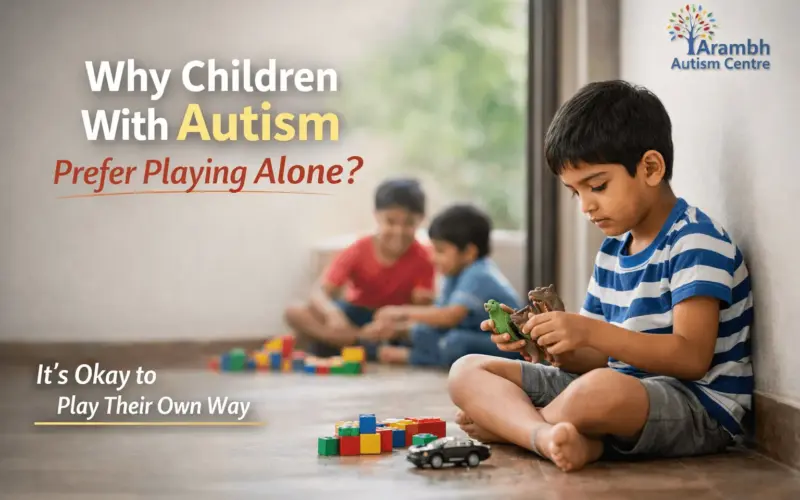
Why Children With Autism Prefer Playing Alone
Neha was sitting in the park, watching her 4-year-old son, Vivaan.
Other children were running, laughing, fighting over toys, and calling each other.
Vivaan was also playing…
But alone.
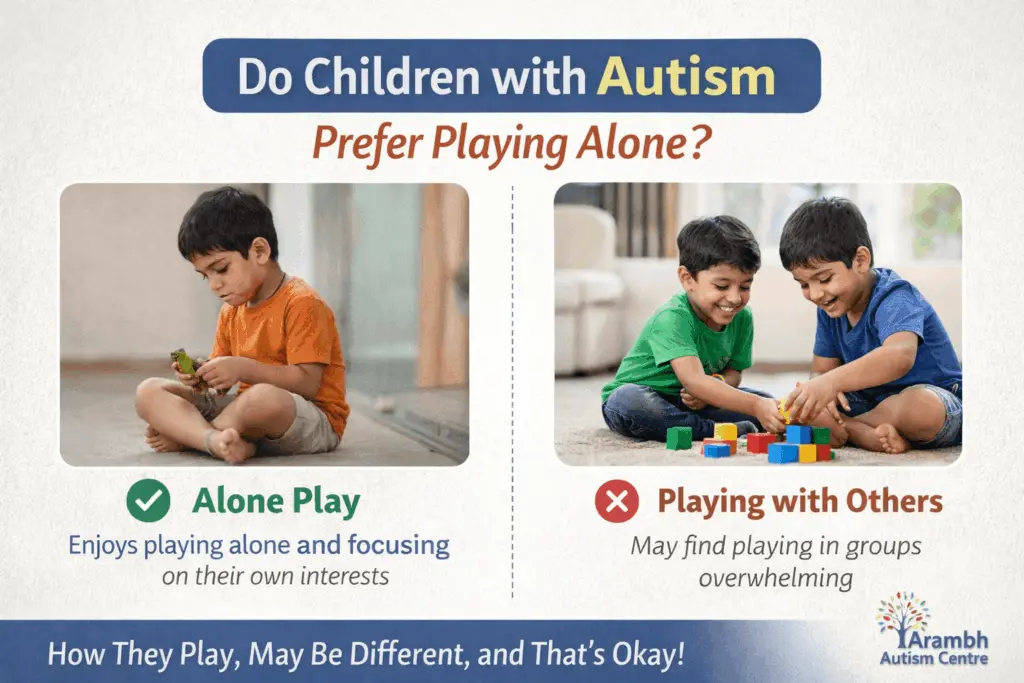
He was sitting in one corner, rolling a car back and forth.
Not once did he look at the other kids.
A little boy came near him and said,
“Let’s play together!”
Vivaan didn’t respond.
Not rude.
Not angry.
Just… uninterested.
Neha felt something heavy in her heart.
“Why doesn’t he play like other kids?”
If you have ever felt this…
You are not alone.
First, Let’s Understand One Important Truth
When a child with autism prefers playing alone…
It does not mean:
-
They don’t like people
-
They don’t feel emotions
-
They don’t want friends
It simply means…
They experience the world differently.
And because of that difference, group play can feel confusing, overwhelming, or even uncomfortable.
What Most People Think (And Why It’s Not Fully True)
Many people say:
-
“He is anti-social”
-
“She is not friendly”
-
“He doesn’t like mixing with others”
But the reality is deeper.
It’s not about “not liking people.”
It’s about:
Not knowing how to connect.
Reason 1: Social Interaction Feels Confusing
For many children, playing with others is natural.
But for a child with autism…
Social rules are not clear.
Things like:
-
When to speak
-
When to wait
-
How to take turns
-
How to respond
These don’t come automatically.
Imagine being in a game where you don’t understand the rules.
You would step back.
That’s exactly how they feel.
Reason 2: They Feel Comfortable in Their Own World
When a child plays alone…
They are in control.
-
No unexpected changes
-
No pressure
-
No confusion
They can repeat the same activity again and again.
And that repetition gives them comfort.
It’s not “wrong.”
It’s their safe space.
Reason 3: Communication Is Difficult
Many children with autism face challenges in communication.
They may:
-
Not speak much
-
Struggle to express needs
-
Find it hard to understand others
So when another child says:
“Come, let’s play!”
They may not understand what to do next.
Instead of feeling embarrassed or confused…
They choose to stay alone.
Reason 4: Too Much Noise and Activity Feels Overwhelming
Think about a playground:
-
Loud voices
-
Fast movements
-
Sudden changes
For some children, this is fun.
For others, it is overwhelming.
Children with autism can be sensitive to:
-
Sound
-
Touch
-
Movement
So group play can feel too much.
And being alone feels peaceful.
Reason 5: They Don’t Naturally Imitate Others
Most children learn by copying.
If one child claps… others clap.
If one runs… others follow.
But children with autism may not naturally imitate.
So even if they watch others playing…
They may not join.
Not because they don’t want to…
But because they don’t know how.
A Real Story That Many Parents Will Feel
Pooja Gupta noticed this in her daughter, Pihu.
Pihu would sit quietly for long periods.
She didn’t demand toys.
Didn’t run behind other kids.
At family functions…
Other children played together.
Pihu stayed in one corner.
People said:
“She is very calm… such a good child.”
But Pooja felt something deeper.
She noticed:
-
No interaction
-
No interest in others
-
No response when kids approached
At first, she waited.
Hoping it would change.
But slowly she understood…
This was not just “nature.”
This was a sign.
And that realization led her to take action.
Today, she supports many parents through Arambh Autism Centre, helping them understand what she once struggled to understand.
Does Playing Alone Always Mean Autism?
No.
And this is very important.
Some children are naturally:
-
Introverted
-
Quiet
-
Independent
They enjoy alone time.
That is completely normal.
But here’s the difference:
A child without autism will still:
-
Respond when called
-
Show emotions
-
Try to communicate
-
Occasionally engage with others
A child with autism may:
-
Consistently avoid interaction
-
Not respond socially
-
Stay in their own pattern
It’s about patterns… not one moment.
When Should Parents Pay Attention?
You should observe closely if your child:
-
Always prefers playing alone
-
Doesn’t respond to other children
-
Avoids eye contact during play
-
Doesn’t try to share toys or experiences
-
Gets upset when someone joins their play
These are not reasons to panic.
But they are reasons to notice.
What Should You Do As a Parent?
First… don’t force.
Saying things like:
“Go play with them!”
“Why are you sitting alone?”
This can create pressure.
Instead:
-
Sit with your child during play
-
Slowly introduce simple interaction
-
Encourage small steps
For example:
-
Rolling a ball back and forth
-
Simple turn-taking games
And most importantly…
Observe without judging.
Why Early Support Can Change Everything
When children get early support…
They can learn:
-
How to interact
-
How to communicate
-
How to feel comfortable with others
These skills don’t come naturally to them.
But they can be taught with patience and right guidance.
And the earlier it starts…
The easier it becomes.
For Parents Who Feel Worried
If your heart is telling you:
“Something is different…”
Listen to it.
Not with fear.
But with awareness.
You are not overthinking.
You are observing.
And that is the first step of helping your child.
You Are Not Alone in This Journey
Many parents go through this phase.
Confusion.
Doubt.
Guilt.
But here’s the truth:
You didn’t cause this.
And you are not late… if you act now.
Take the First Step Today
If your child prefers playing alone and you feel unsure…
Don’t ignore it.
Talk to someone who understands both sides…
As a professional and as a parent.
You can connect with Pooja Gupta, owner of Arambh Autism Centre, and a mother who has walked this path with her daughter Pihu.
📞 Contact: 9455920030
Sometimes, one conversation can give you clarity…
And clarity can change your child’s future.
Final Thought
Your child is not avoiding the world.
They are just experiencing it differently.
With the right support…
They can learn to connect.
Slowly.
Gently.
Beautifully.
And it all begins…
With you understanding them.
Understand how your bachcha can build friendships.